

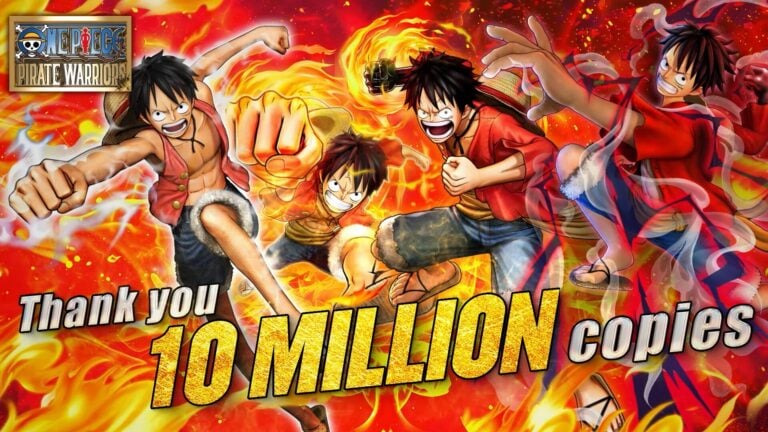
Bandai Namco and developer Omega Force (a division of Koei Tecmo) have officially announced that the One Piece: Pirate Warriors series has surpassed a staggering 10 million units in total sales. This milestone cements the franchise as one of the most successful anime-to-game adaptations in history, following the journey of Monkey D. Luffy and the Straw Hat Crew across over a decade of high-octane releases.
To understand these sales figures, one must look at the unprecedented popularity of One Piece in its home country. Created by Eiichiro Oda, the manga has been a fixture of Weekly Shonen Jump since 1997. In Japan, One Piece is more than just a comic; it is a national phenomenon. It holds the Guinness World Record for the most copies published for the same comic book series by a single author, with over 500 million copies in circulation globally. Its presence in Japan is ubiquitous, from themed train lines and “Mugiwara” specialty stores to massive statues of the characters erected in Kumamoto Prefecture.
The “Warriors” (or Musou) gameplay formula—defined by a single powerful hero taking on thousands of disposable enemies—is a perfect mechanical fit for the One Piece universe. In the anime and manga, Luffy and his crew are often depicted as “one-man armies” capable of clearing out entire battalions of Marines or rival pirate grunts with a single specialized attack.
The game format allows players to physically manifest the scale of a Devil Fruit user’s power. Whether it is Luffy’s “Gum-Gum Gatling” hitting dozens of foes at once or Whitebeard literally cracking the air to send shockwaves through an entire battlefield, the Musou engine captures the chaotic, over-the-top scale of Oda’s combat better than almost any other genre. This synergy between the source material’s power fantasy and the game’s core loop is precisely why the series has maintained such incredible momentum for over thirteen years.
