

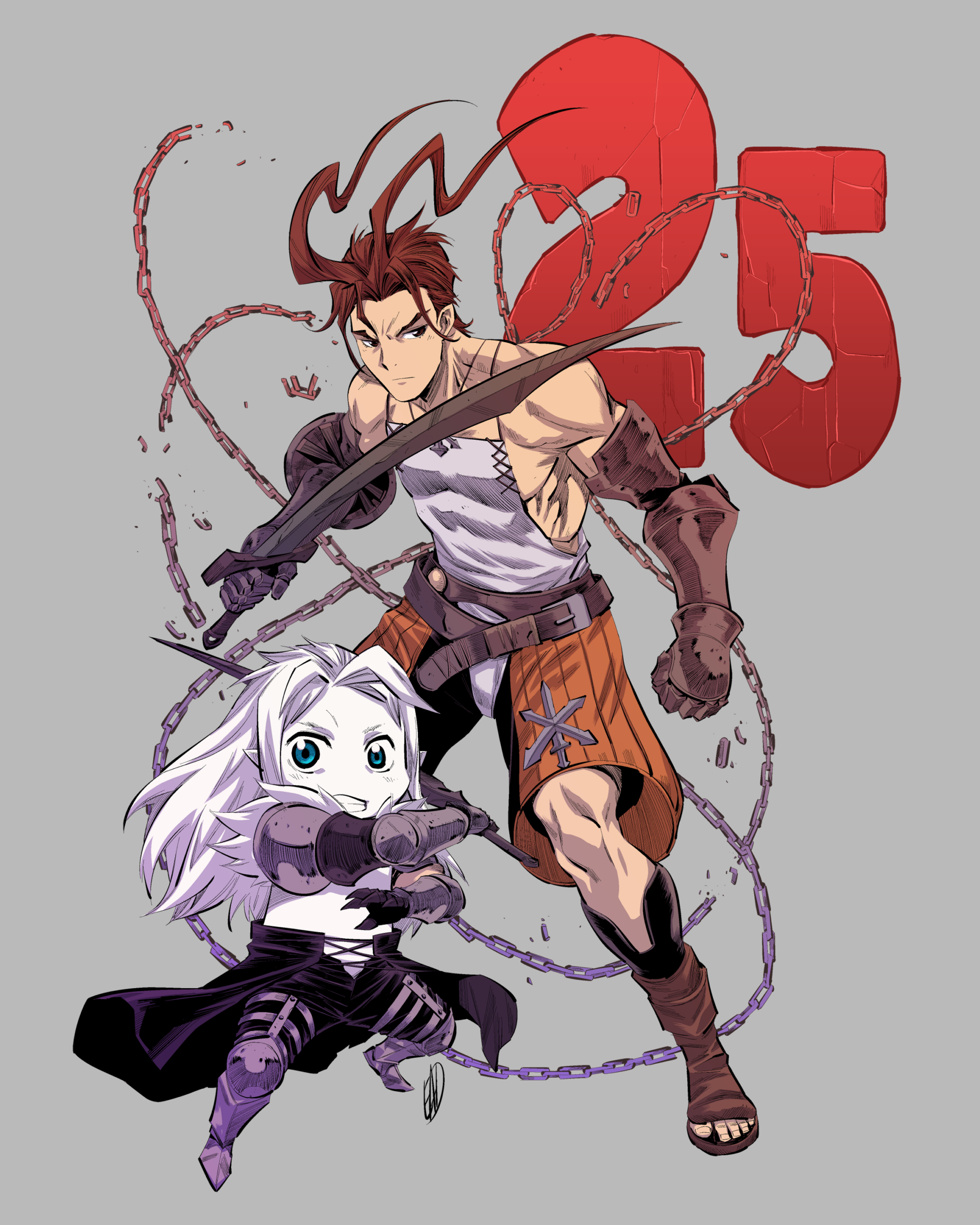
Twenty-five years ago, in the twilight years of the original PlayStation, Square (now Square Enix) released a game that defied easy categorization and snatched the one and only 40/40 mark from Famitsu for the console. It wasn’t the sprawling vibrant fantasy of Final Fantasy IX, nor was it a traditional tactical RPG of whose its director was known of. It was something darker, denser, and infinitely more complex.
Today, we celebrate the 25th anniversary of Vagrant Story, a masterful dungeon crawler that remains one of the most artistic, mechanically deep, and challenging games ever created. And as we look back at the legacy of Ashley Riot and the haunted city of Leá Monde, one thought rings louder than any other: It is a crime that this game remains locked on retro hardware, let alone, PS1.
A Masterpiece of Atmosphere and Mechanics
Released in 2000, Vagrant Story was brought to life by a “dream team” led by director Yasumi Matsuno (one of my all-time favorite writers, I mean come on, he wrote Tactics Ogre), featuring the distinct character designs of Akihiko Yoshida (also an all-time favorite artist, only rivaled bu Mutsumi Innomata of Tales Series) and a haunting score by Hitoshi Sakimoto. This was the same creative DNA that gave us Final Fantasy Tactics, and their penchant for political intrigue and mature storytelling was on full display.
But Vagrant Story was a solitary experience. You played as Ashley Riot, a Riskbreaker of the Valendia Knights of Peace, navigating a ruined city teeming with dark magic, political conspiracies, and undead horrors.
The game was revolutionary in its presentation from its time. It abandoned pre-rendered backgrounds for a fully 3D, rotatable world pushing the PS1 to its absolute limits. It utilized cinematic camera angles and comic-book style speech bubbles to deliver its Shakespearean dialogue (and trust me when I say, it was what made me fall in love with it), creating an atmosphere that felt ancient and impressive.
Then there was the gameplay. It was—and remains—absolutely creative. The combat system was a hybrid of real-time movement and paused tactical decisions, allowing you to target specific enemy body parts to cripple their movement or reduce their accuracy. It introduced a “Risk” system, a high-stakes gamble where attacking too frequently made you vulnerable to massive damage.
And, of course, the weapon crafting. To survive Leá Monde, you had to become a blacksmith, forging and combining blades to create weapons specialized against specific enemy types—Undead, Phantom, Dragon, Beast. It was a system of dizzying depth that obsessed players for hundreds of hours.
No game to date, even with our modern technology managed to beat what Vagrant Story gave us in term of system and presentation and to this day I yarn so much to have something of the same setup and creativity.
Our Desperate Need For a Modern Return
Celebrating a 25th anniversary is bittersweet when the guest of honor is so hard to visit. Currently, legally playing Vagrant Story means dusting off a PS1, or relying on the digital stores of the PS3 and Vita—stores that are increasingly at risk of disappearing.
Vagrant Story is not just deserving of a remaster; it needs one to survive and be preserved.
While the art direction is timeless, the mechanics of 2000 can be a bit of a barrier today. The incredible depth of the crafting system is buried under menus that are cumbersome by modern standards. The difficulty spikes are legendary. A modern remaster could polish these rough edges with Quality-of-Life improvements—streamlined inventory management, faster weapon switching, and perhaps a slightly more forgiving save system—without sacrificing the core challenge, like how the same team did recently with Final Fantasy Tactics.
Imagine Leá Monde rendered with modern lighting techniques, enhancing the oppressive atmosphere. Imagine hearing Sakimoto’s score with full orchestration. Square Enix has done incredible work revitalizing their back catalog recently with titles like Tactics Ogre: Reborn, Final Fantasy Tactics, Dragon Quest and the SaGa series. They have proven they know how to respect the source material while making it playable for a modern audience. So why not Vagrant Story, their most prestigous game to date? that’s a question I hope to get answer to before the page of this chapter is turned over for good.
Happy 25th, Riskbreaker
For now, as we pray for this to happen, we celebrate what we have: a singular achievement in gaming history that proved an RPG could be a tense, isolating, and cerebral dungeon crawler.
The fan art created for this anniversary proves the fire still burns for Ashley Riot’s journey with our beloved Ermis as his rival Sydney. We remember the smell of old stone, the clang of forging steel, and the thrill of landing a perfect chain attack.
Happy 25th Anniversary, Vagrant Story. Your fans haven’t forgotten you. Now, we just need Square Enix to unlock the gates of Leá Monde once again.
