

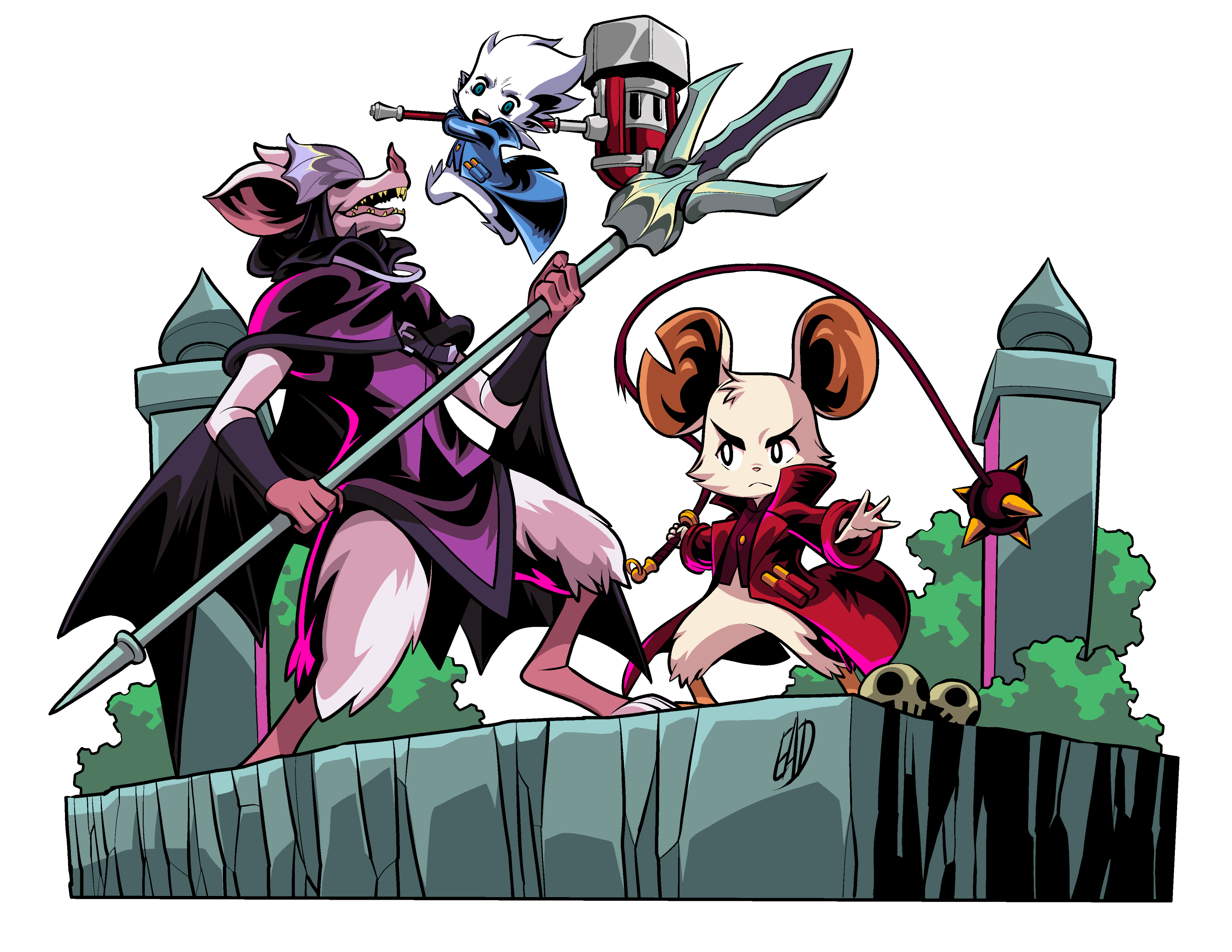
Mina The Hollower Review: Bones, Not Cheese
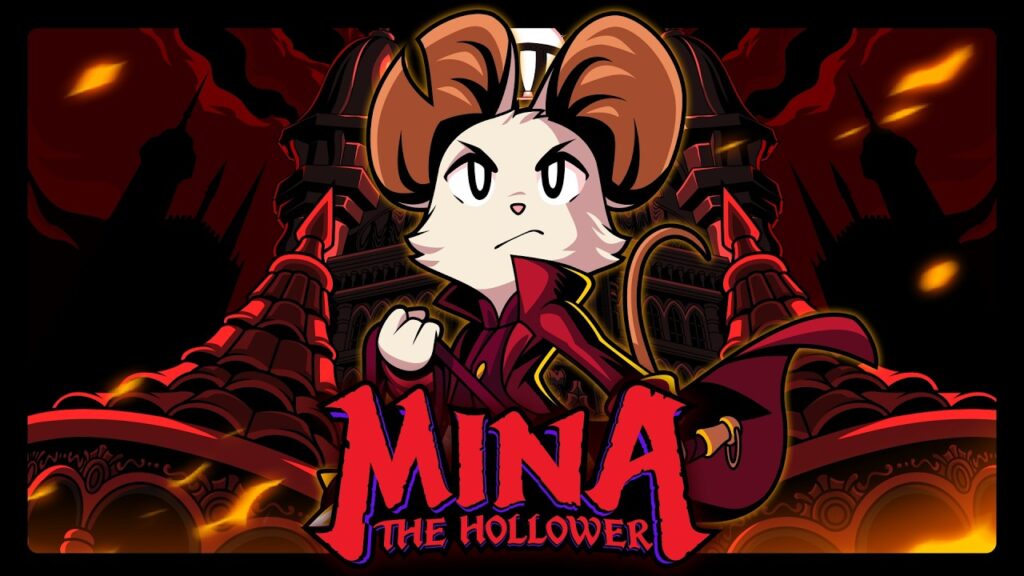
I’ve been tracking Mina the Hollower since its Kickstarter days, and I was instantly hooked by the gorgeous art, charming character design, and a gameplay that promised to take me right back to my childhood days of playing 8-bit Zelda classics as it gorgously have the same DNA of that era. It’s been a long seven-year wait since its announcement, leaving me to wonder if the final product could ever live up to the hype I had. But the very second I booted up the game and that title screen rolled, it just instantly clicked—I knew I was about to experience something incredibly fun and made with love.
A Mission to Restore Generators, But:
True to the classic DNA it aims to replicate, Mina the Hollower doesn’t hold your hand at all. The moment you press start, the game drops you straight into the thick of the action. Before the overarching premise even has time to settle, you are pulled into the chaos happening on the island and forced to learn the mechanics on your feet and at the moment. It was there, in the very first combat encounter, that I felt a distinct and undeniable Souls-like energy beneath the 8-bit aesthetic. And because I had actively shielded myself from previews and spoilers to go in with a clean slate, this caught me off guard—but in the best way possible. It was a thrilling, sink-or-swim introduction that hooked up me instantly.
I know the mere mention of the term “Souls-like” can raise red flags for players concerned about punishing difficulty (a topic I will unpack in a later section), but rest assured, the game balances its challenge beautifully. And to start, if being thrown directly into the fire feels overwhelming, a quick pause and a visit to the settings screen reveals a beautifully crafted, comprehensive digital manual—with a fantastic nod to retro gaming—that details everything you need on how to play.
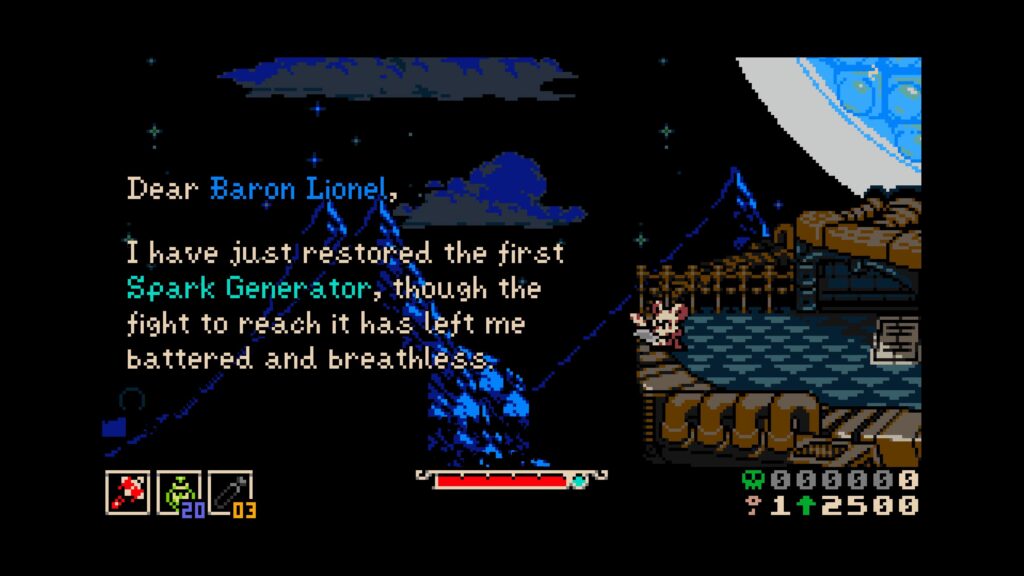
Sticking to our traditional Ermis review structure, we always tackle the story first. And let me tell you, the narrative in Mina caught me completely by surprise. The lore here is significantly heavier and more nuanced than its charming pixel art suggests. On the surface, it’s a straightforward adventure: you play as a brilliant scientist navigating an island plagued by mysterious monsters and fire outbreak leading to a bafflingly negligent government is turning a blind eye to the chaos, and an unknown saboteur is actively destroying the island’s power generators—generators that Mina herself invented.
But as you push through the game’s expertly paced climaxes, the plot sheds its simple exterior and evolves into something incredibly poignant. The narrative subtly shifts into a commentary on societal perception—how masses are manipulated by what they are told to see, rather than the objective reality of what is actually happening around them. It is a striking parallel to the sociopolitical climate we navigate in the real world today. Finding this kind of thematic depth in gaming is something I deeply appreciate. Whether the developers intended it as a direct allegory or not, its message of conviction and the harsh realization of reality makes the entire journey profoundly impactful. It struck a very similar chord for me as the narrative themes found in Tales of Zestiria—specifically regarding the heavy burden of seeing the truth when the rest of the world refuses to.
This thoughtful design isn’t just reserved for the main plot; it bleeds into every creative aspect and side interaction in the game. During a visit to the slums of Ossex, the game’s bustling hub city, I encountered a destitute NPC asking for a few Bones. After handing some over and wandering into the adjacent building, the resident inside casually mentioned that she had witnessed my act of kindness. In return, she gifted me some of the most valuable assets in the game. It’s a brilliant, organic moment of world-building where compassion yields tangible rewards, making the world feel alive and reactive especially for me.
Speaking of Bones, the creative direction in Mina is wonderfully crafted, I have to say. You would naturally assume that playing as an adorable mouse protagonist would mean cheese would be involved in any capacity. Instead, the game operates on a macabre economy of Bones, which you use for absolutely everything, including leveling up your stats. It is this exact kind of bizarre, charming detail that proves how much love the developers poured into this setting. From genuinely hilarious character encounters to imposing bosses harboring their own tragic, unique storylines, Mina the Hollower delivers an absolute masterclass in world-building and lore.
Don't Fear the "Souls-Like" Label:
As I write this review, I am seeing a lot of online discourse expressing concern that Mina the Hollower’s difficulty might alienate players. I am here to assure you, dear readers, that this should not deter you from diving in.
It is true that Mina faithfully adapts many fundamental Souls-like mechanics into its 16-bit world. You collect Bones as currency, you risk losing them upon death, and surviving combat against both towering bosses and everyday mobs requires meticulous, well-timed dodging. But before we dive deep into how the game balances itse’f let’s talk about the basic gameplay, the game offers you three-pronged combat mechanics to handle the chaos it brings towards you: normal attacks, sidearms, and burrowing.
Your normal attacks rely on a primary weapon. There are five distinct weapons to discover and master (I quickly found myself favoring the Belmont-esque whip). Complementing this are your sidearms—powerful secondary tools governed by a “stamina” meter that cleverly refills using magic flasks. The variety here is fantastic, ranging from classic throwing knives to summoning a collared monster that attacks enemies autonomously. My absolute favorite is the Mist Jar, a dynamic tool that launches Mina even diagonally to strike foes while simultaneously charging her Plasma bar and her HP right after it is full.
Speaking of Plasma, this brings us to the game’s approach to healing. Taking damage in Mina requires you to be aggressive. By striking enemies, you fill a Plasma bar; you must then consume a Plasma flask to convert that stored energy back into health before taking another hit and losing the potential heal entirely. Finally, tying the whole combat loop together is the burrowing mechanic. Serving as Mina’s dodge roll, burrowing allows our mousy protagonist to dive beneath the earth for a brief window, rendering her invincible to sweeping attacks (most of the time).
If the aggressive Plasma healing and borrowing loop sounds like a stressful hustle, let me explain why the difficulty is actually incredibly manageable. The developers implemented two brilliant systems to democratize the challenge: Trinkets and Modifiers.
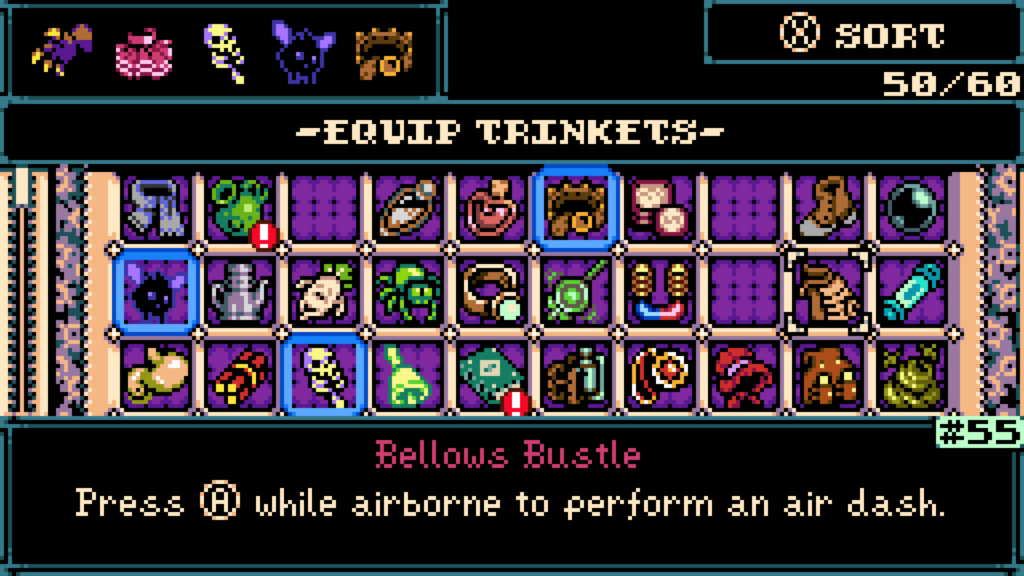
Scattered across the island are over 60 equippable Trinkets, and you can comfortably mix and match up to five at a time to create highly specialized builds. These items are the ultimate problem-solvers. Are you struggling with platforming and falling to your death? Equip the Trinket that grants a safety jump, or the one that spawns a rescue web. Keep getting knocked off ledges by environmental lightning? There is a Trinket that grants periodic immunity to thunder. Does the manual Plasma healing loop feel too frantic during a fast-paced boss fight? You can simply equip a Trinket that automatically consumes a flask for you the moment your Plasma meter is full. And beyond combat, Trinkets and sidearms (like the incredibly versatile Fishing Rod) also double as exploration tools, helping you solve environmental puzzles and reach hidden areas, they are really that useful.
If the Trinket system isn’t quite enough to ease the friction, the game’s settings menu offers a robust suite of Modifiers. These accessibility options allow you to tweak the game’s fundamental rules—such as increasing Mina’s base movement speed or universally buffing your defense by 25%.
While enabling these modifiers will disable trophy progression, they serve a beautiful purpose: they allow you to strip away the punishing Souls-like elements and transform Mina the Hollower into a breezy, classic top-down Zelda experience. It ensures that if you are just here for the gorgeous art, the lore, and the pure fun factor, nothing will stand in your way.
A Masterclass in Boss Design
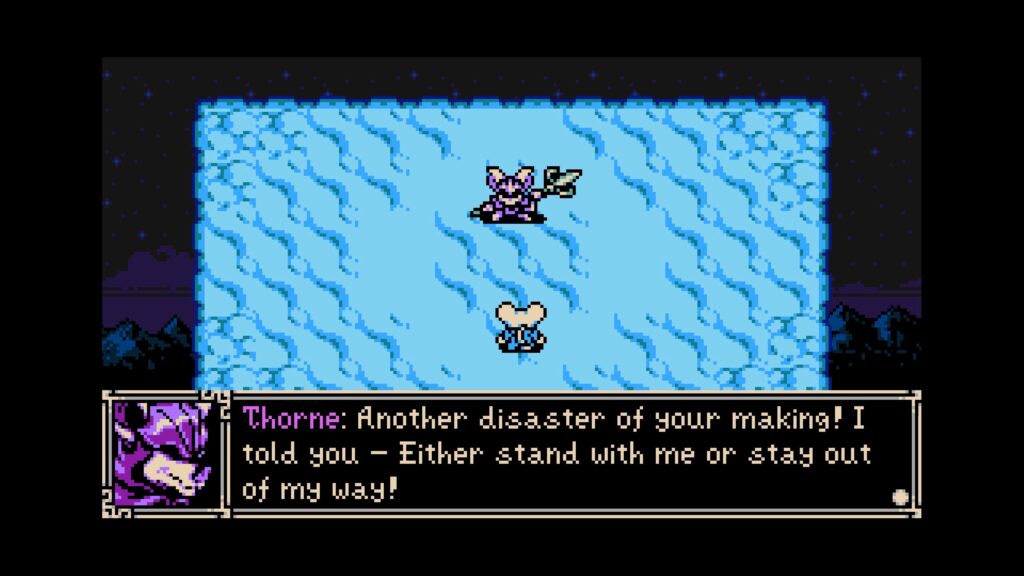
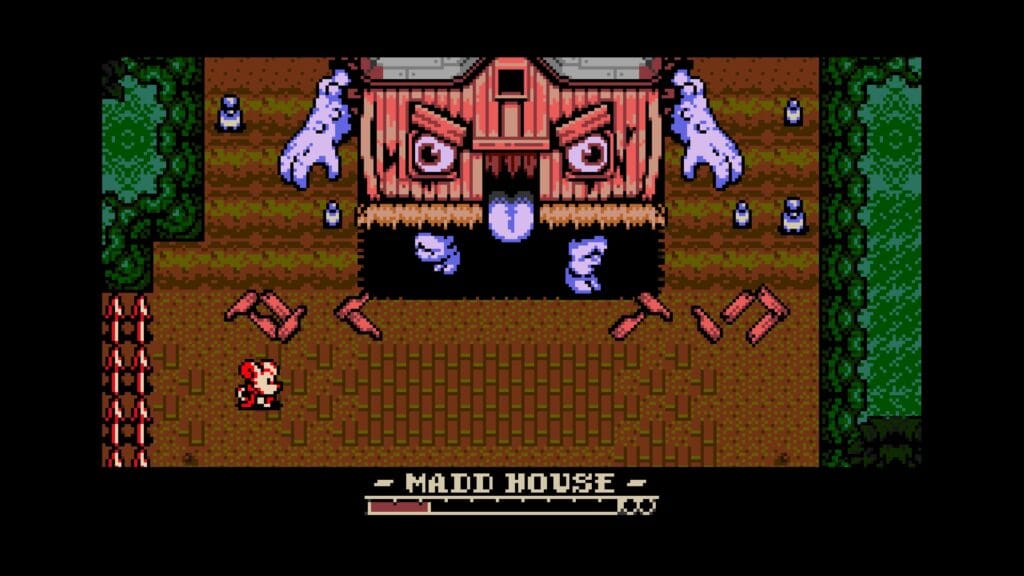
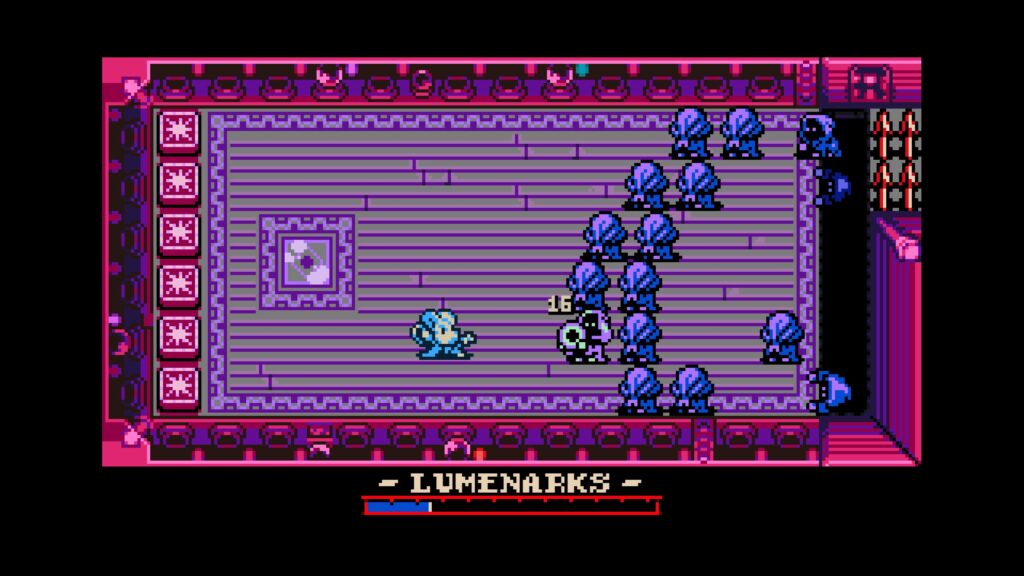
If there is one aspect where Mina the Hollower confidently plants its flag and claims absolute victory, it is the boss design. The island is teeming with formidable foes, boasting an impressive roster of upwards of 28 distinct boss encounters split between mandatory story gatekeepers and hidden optional challengers. While many games with large boss counts suffer from repetitive filler, Mina defies the odds; every single one of these encounters, without exception, is uniquely crafted, mechanically distinct, and genuinely thrilling to conquer.
The game’s strict adherence to its 8-bit aesthetic is actually the secret weapon that elevates these fights. Looking back at the technical evolution of early 8-bit gaming systems, hardware limitations forced developers to prioritize mechanical creativity and pattern recognition over sheer visual spectacle. Mina taps directly into that historical design philosophy and modernizes it beautifully. Instead of relying on the common 3D gaming crutch of simply animating a massive, hyper-detailed monster thoughtlessly lunging at the camera, Mina treats its bosses like high-stakes, fast-paced puzzles. Every encounter introduces a fresh mechanical concept that forces you to adapt. You aren’t just mashing the attack button; you are actively engaging with the arena and the enemy’s AI. Sometimes you are threading the needle to strike a tiny, well-guarded weak point. Other times, you are playing matador, expertly baiting a massive beast into a dead sprint so it crashes headfirst into a wall, leaving it dazed, tired, and completely vulnerable to your strikes.
Despite the “Souls-like” label and the inherent challenge of decoding these combat puzzles, I never found myself hitting a wall of frustration. This is a direct testament to the brilliant Trinket system I praised earlier. Because you can tailor Mina’s loadout so extensively, you are never locked into a single playstyle. There is always a strategic counter to whatever specific gimmick a boss throws your way, ensuring that every victory feels earned rather than artificially punishing.
Furthermore, the game deeply respects your time and effort by offering tangible, deeply satisfying rewards for your triumphs. Conquering a main story boss grants a permanent boost to your maximum HP, a vital upgrade that perfectly prepares you for the escalating threats of the this island. Meanwhile, venturing off the beaten path to hunt down optional bosses yields powerful new Trinkets, constantly expanding your tactical arsenal.
The sheer diversity and volume of these 28 encounters is Mina the Hollower‘s ultimate flex. Trust me when I say that this game delivers some of the most satisfying, varied, and purely fun boss fights in the entire Souls-like subgenre—standing proudly toe-to-toe with the mechanical mastery and satisfaction we saw in heavyweight titles like Lies of P.
An Open World Cubic Puzzle:
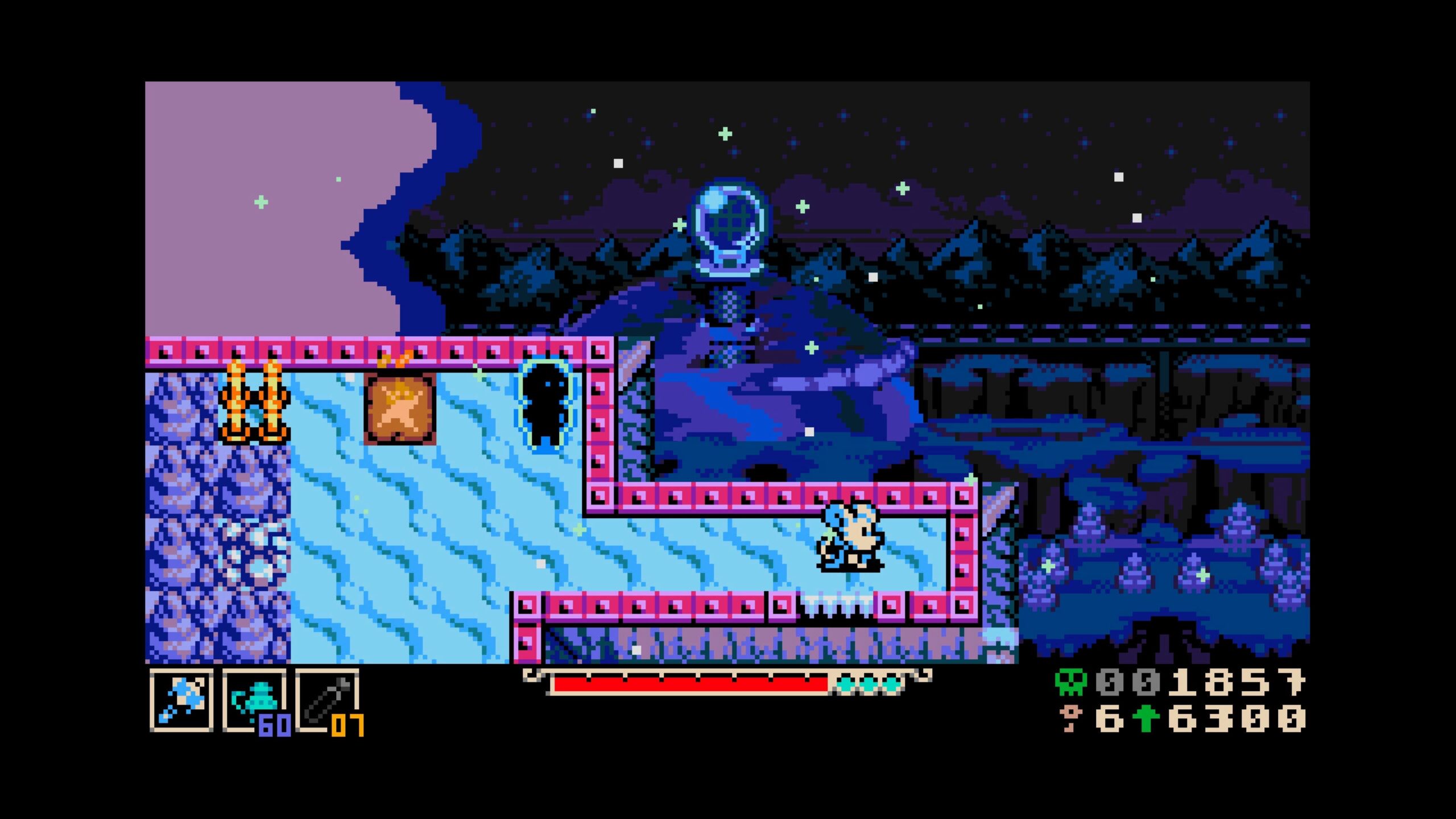
I have to reiterate this point because it is crucial: do not let the charming 8-bit facade fool you. Looking back at the technical evolution of early gaming systems like the MSX, we often associate pixel art with rigid, linear levels. Mina the Hollower shatters that expectation entirely by delivering a sprawling, complex, and ingeniously interconnected open world. It is a map where everything weaves together seamlessly, granting you an incredible amount of freedom. While the island is technically divided into distinct biomes and sections, its non-linear structure empowers you to visit, tackle, and conquer these areas in almost any order you choose right from the very beginning.
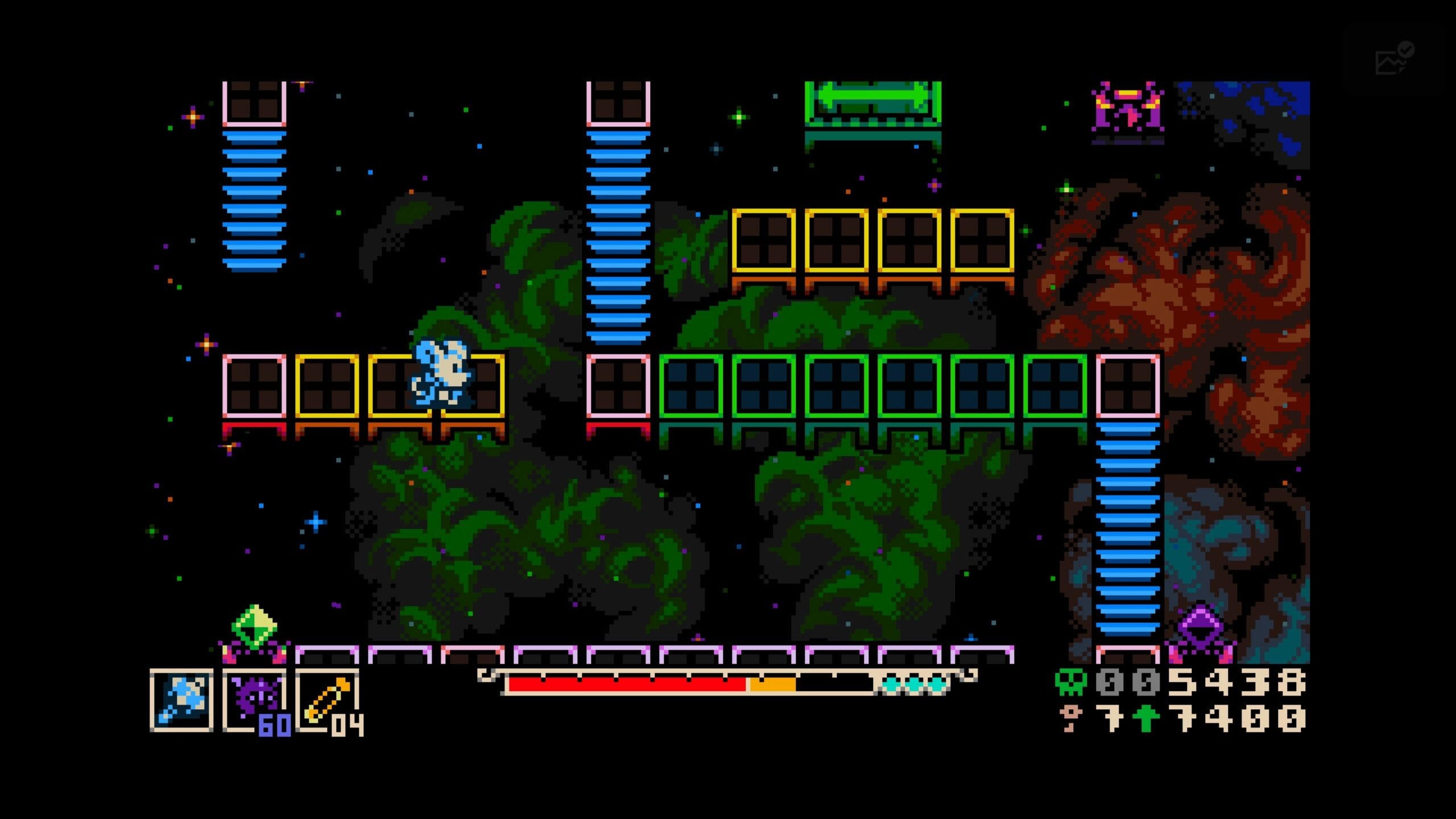
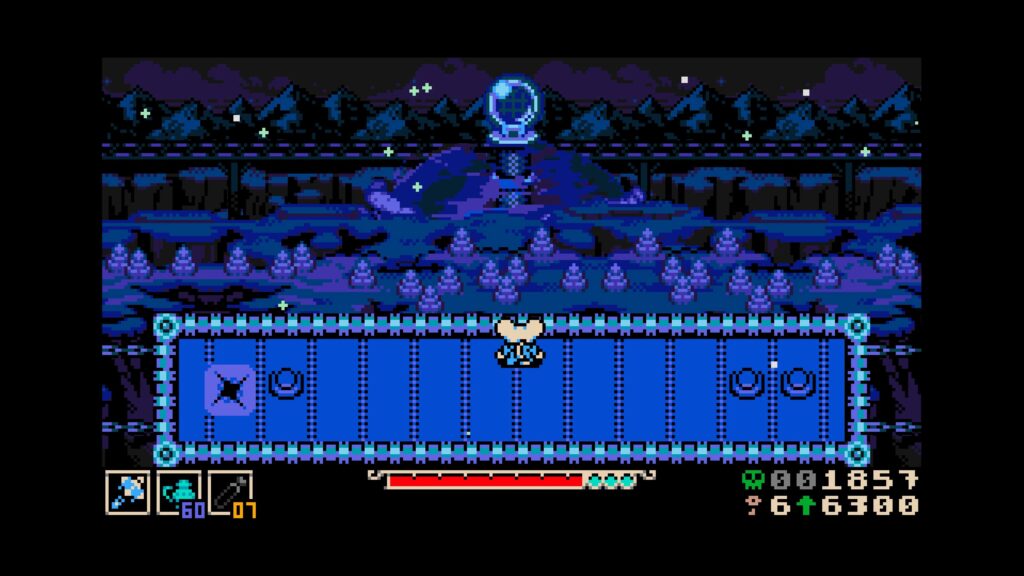
The world itself is a masterclass in environmental puzzle design. Progressing isn’t just about surviving combat; it relies heavily on your ability to read the terrain. You will constantly be on the lookout for hidden keys, locked chests, hidden walls and elusive Trinkets, all of which are integrated flawlessly into the landscape. A standout example of this brilliant design is the Astral Orrery. This vibrantly colorful platforming dungeon completely changes the pace of the game, pushing the fun factor to absolute maximum heights with its clever vertical layout and deeply satisfying traversal challenges.
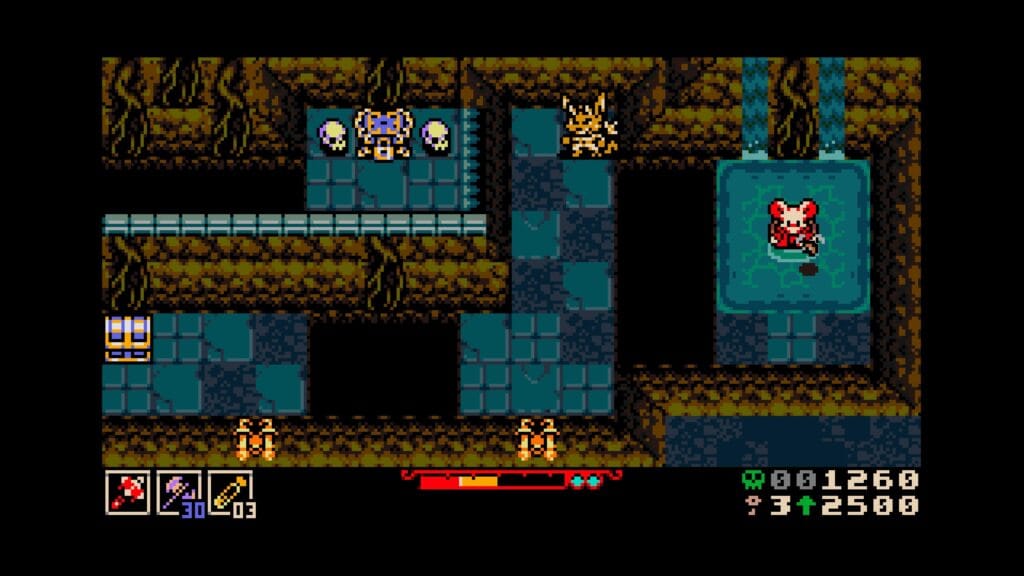
The density of secrets packed into Mina is staggering. I consistently found myself eagerly backtracking to previous areas just to double-check if I had missed an obscured turn, or systematically striking suspicious walls to unveil hidden rooms. The map practically begs you to leave no stone unturned. Of course, this exploration comes with its own inherent tension. Because the game utilizes that demanding Plasma healing system, there are absolutely moments of sheer panic where you find yourself blindly rushing through an uncharted area, desperately searching for an under lab because your flasks are completely empty. Yet, that lingering vulnerability only makes the exploration more gripping.
And honestly I will confidently stand by this statement: Mina the Hollower is one of the best-designed games in terms of pure exploration, rivaled only by modern behemoths like Elden Ring. The sheer scale of the map, the freedom it offers, and the way it consistently rewards your curiosity make exploring the island an absolute joy. There is truly nothing quite as satisfying as stumbling off the beaten path, surviving a surprise ambush by a hidden mini-boss, and walking away with a sweet new Trinket to perfect your build.
The Bumps in the Road:
For all its brilliance, Mina the Hollower is not entirely without its flaws. To be fair to the developers, replicating the unforgiving nature of classic games means adopting some of their inherent frustrations, but there are moments where the difficulty feels furstrating rather than challanging. Platforming, for instance, can occasionally be a headache; I found myself mildly frustrated after plummeting off cliffs simply because I missed a pixel-perfect jump window. Additionally, before you acquire the world map (which, thankfully, can be found very early on if you know where to look), the sheer density of the interconnected world can be incredibly disorienting, leaving you completely lost in the early hours of the game.
However, two specific design choices stood out as my biggest grievances: the incredibly demanding trophy list, and the glaring lack of diagonal primary attacks.
Looking back at the technical evolution of early 8-bit hardware like the MSX or the NES, standard attacks were often strictly limited to the four cardinal directions due to primitive D-pads and simple sprite programming. While I understand Mina is strictly adhering to those nostalgic game capabilities, the omission of a diagonal strike for your main weapon creates unnecessary friction in a modern Souls-like. The game gives you five distinct primary weapons, but honestly? I would have gladly traded two of them away if it meant the remaining three allowed me to strike at an angle. During fast-paced boss fights, enemies frequently got the best of me not because I misread their attacks, but because I couldn’t align my cardinal hit with their position. Forcing the player to constantly stutter-step to line up perfectly horizontal or vertical strikes adds an artificial layer of challenge that slows down the otherwise buttery-smooth combat.
This brings me to the trophies. If you are a completionist, prepare for a grueling grind. If you simply play through the narrative straightforwardly, you will reach the end credits having barely unlocked a fraction of the list. The vast majority of the achievements are locked behind highly specific conditional runs and multiple New Game+ playthroughs. For players who want to experience the whole game without dedicating hundreds of hours to repetitive clears, this design choice is a massive turn-off.
The frustration of hunting down these obscure trophies is only compounded by the game’s traversal mechanics. For a world this massive and intricately designed, a true fast-travel system would have been a godsend. I frequently found myself trudging on foot all the way back to the central hub of Ossex. To be completely fair, the developers did include a regional train system to help you bridge major distances. Still, taking the train and then hiking the rest of the way is an undeniable hassle when you just need to backtrack to purchase a specific item from a shop you missed, or revisit a cleared dungeon.
Art and Audio That Defy Their Era:
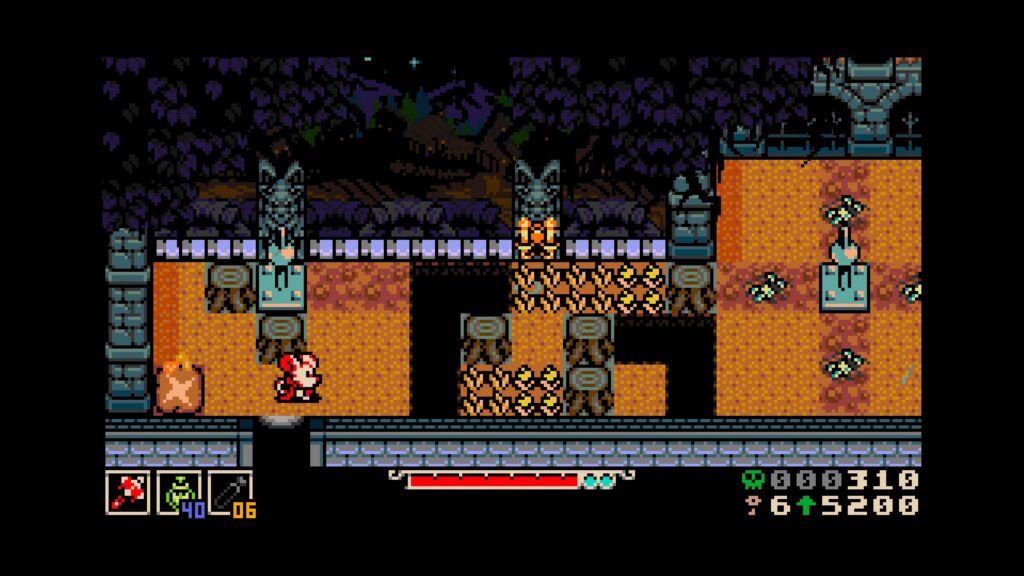
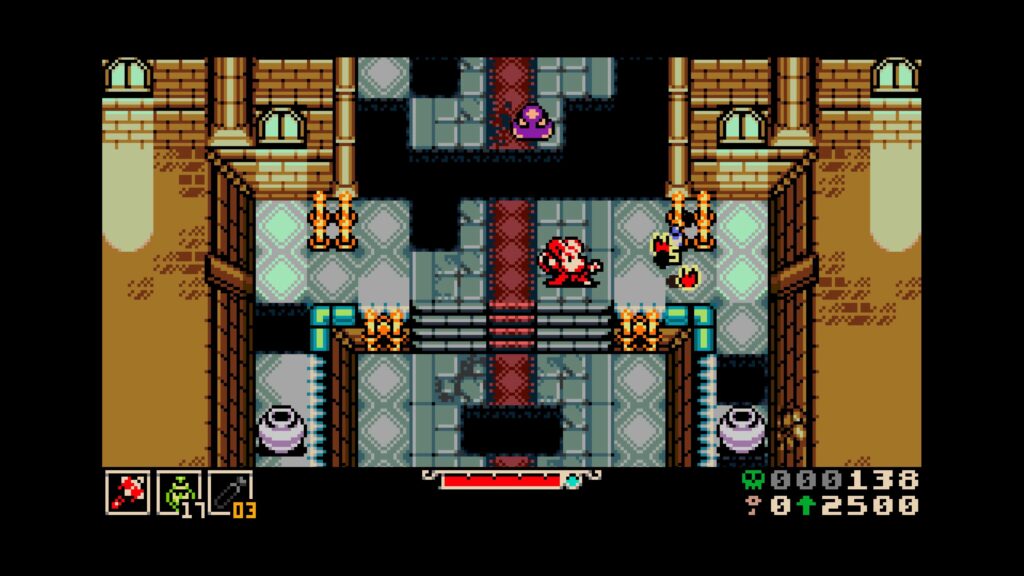
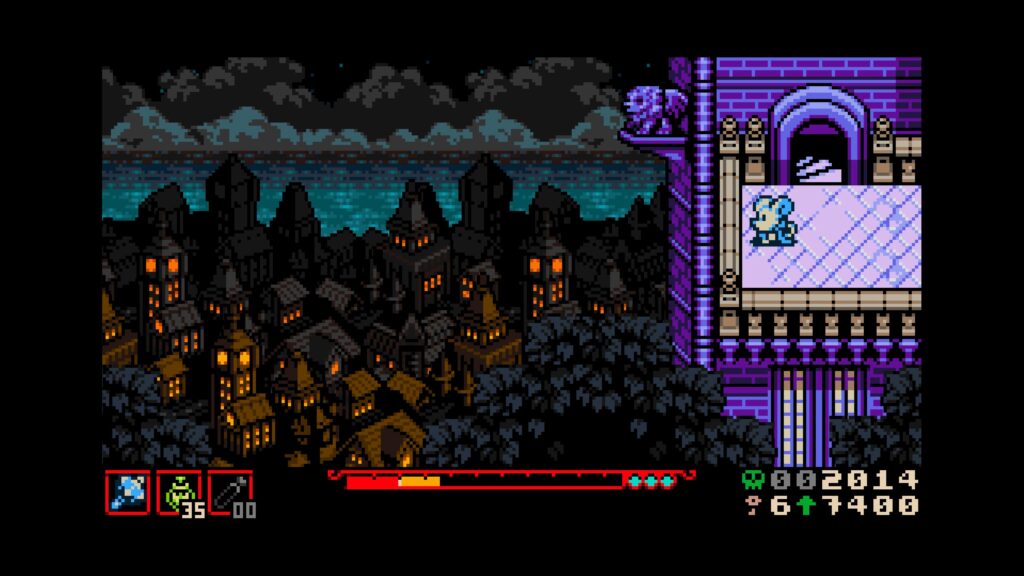
In an industry currently obsessed with photorealistic textures, ballooning development budgets, and massive, sweeping orchestral scores, Mina the Hollower makes a bold, defiant statement: impeccable art direction will always triumph over raw polygon counts. The game’s intricate 8-bit beauty proves that you don’t need hundreds of millions of dollars to create a visually breathtaking world. The pixel art is incredibly deliberate and dense, utilizing vibrant color palettes and expressive animations that inject more soul into a single tiny sprite than most modern AAA games manage with an entirely motion-captured cast.
But where the presentation truly punches above its weight class is the soundtrack. The audio profile is nothing short of phenomenal. What makes it particularly special—and an absolute treat for those of us who appreciate the deep technical history of early gaming hardware—is exactly how it was crafted. The music uses the native Game Boy sound chip paired seamlessly with the Konami MSX computer Sound Cartridge (SCC+). The resulting audio is incredibly rich, textured, and layered in a way that modern chiptune imitations rarely achieve.
Also having the legendary composer Yuzo Koshiro step in to contribute a few guest tracks is just the perfect finishing touch. The melodies are atmospheric, haunting, and pulse-pounding, proving that the distinct, authentic sound of the MSX era can easily rival the emotional impact of any modern, hugely budgeted score. It is an absolute masterclass in audiovisual design.
When a game takes seven years to reach our hands, the weight of expectation can often crush the final product. Mina the Hollower does not just survive that pressure; it burrows straight through it, emerging as one of the most mechanically satisfying and narratively resonant action RPGs of the year.
Yes, there are minor bumps along the road. The lack of diagonal primary attacks creates moments of artificial friction, and the demanding, multi-playthrough trophy list might exhaust completionists. However, these are small prices to pay for a game that so brilliantly respects the intelligence and curiosity of its players. Between the incredibly deep Trinket balancing system, the 28 spectacularly designed puzzle-box bosses, and the jaw-dropping MSX-powered soundtrack, the moment-to-moment gameplay is a sheer joy.
Yet, what elevates Mina from a fun homage to a true modern classic is its thematic weight. What begins as a simple scientific mission to restore power generators to a monster-infested island masterfully transforms into a heavy, relatable commentary on willful societal ignorance. Mina’s fight isn’t just against the beasts lurking in the dark; it is against a government and a society that flat-out refuses to acknowledge the reality crumbling around them. In a world desperate to be fed comfortable illusions, our mousy scientist uses her intellect and conviction to drag the harsh facts into the light. By perfectly blending this profound narrative depth with flawless mechanical execution, the conclusion is crystal clear: Mina the Hollower has unearthed an absolute masterpiece.

- A surprisingly heavy, relatable narrative that elevates a classic 8-bit adventure into a profound fight against societal ignorance.
- A masterclass in boss design, offering diverse unique, puzzle-like encounters that perfectly blend Souls-like combat with retro mechanics.
- An ingeniously interconnected open world teeming with secrets, where exploration is deeply rewarding and rivaled only by modern behemoths.
- An incredibly deep equiments system that beautifully balances the punishing difficulty.

- Chore-like backtracking exacerbated by the absence of a true fast-travel system, making return trips to the hub city a memory game.
- An exhaustingly demanding trophy list locked behind highly specific conditional runs and multiple playthroughs.
- Occasional frustrating platforming mechanics where missing a pixel-perfect jump window leads to deaths.
