

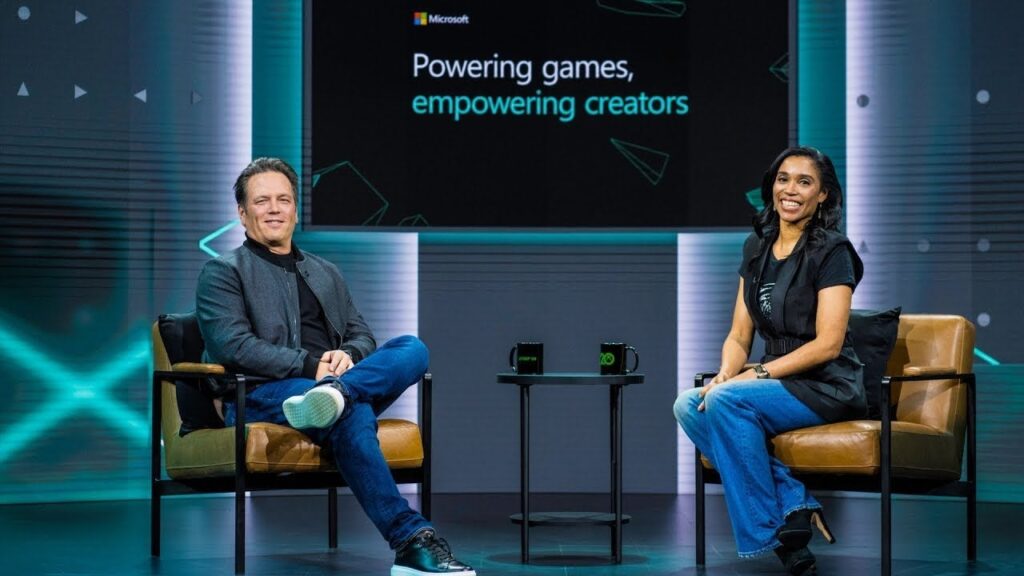
If you read the official press releases from Microsoft this past Friday, you’d think the halls of Xbox HQ were filled with warm hugs and tearful goodbyes. Phil Spencer, the man who steered the Xbox ship for over a decade, is “retiring” after an impressive 38-year run at the company. Simultaneously, Xbox President Sarah Bond is “stepping down to begin a new chapter.”
The PR machine is working overtime to paint this as a natural passing of the torch to new Microsoft Gaming CEO Asha Sharma. But let’s cut through the corporate speak for a second. When the CEO and the President—who was widely considered his hand-picked successor—both exit the building on the exact same day to be replaced by a corporate AI executive, that isn’t a retirement party. That is a purge.
Despite what Microsoft and Satya Nadella are saying, I’m calling it right now: Phil Spencer and Sarah Bond didn’t just decide to pack up their desks. They were booted out.
Let’s look at the facts. Phil Spencer has spent the last few years fighting tooth and nail through regulatory hell to acquire Activision Blizzard King for $69 billion. He fundamentally reshaped the industry’s landscape. You don’t spend years setting up the biggest acquisition in video game history just to hand the keys to someone else right as the ink is drying.
Even more damning is the departure of Sarah Bond. Bond was promoted to President of Xbox relatively recently and was the face of the brand’s future. She was out there championing the next-generation console and the expanding ecosystem. In fact, she was posting on LinkedIn on behalf of Xbox just hours before the news broke that she was leaving. Does that sound like a carefully planned, mutual departure to you?
When the reigning boss steps down, the heir apparent takes over. Bond leaving alongside Spencer suggests that whatever direction Microsoft’s board wanted to take Xbox, the old guard either fundamentally disagreed with it, or the board lost faith in their ability to execute it.
So, why the sudden house-cleaning? It comes down to two things: a struggling traditional hardware market and Microsoft’s company-wide obsession with Artificial Intelligence.
For all of Spencer’s goodwill with gamers—and he earned a lot of it by pushing Game Pass and backward compatibility—Xbox’s actual hardware sales have been taking a beating. Following massive layoffs, studio closures, and recent hardware price hikes due to economic pressures, Microsoft’s investors were likely demanding a drastic shift in strategy. Xbox lost the console war, and the board knows it.
Enter Asha Sharma.
Sharma isn’t a traditional gaming industry veteran who worked her way up through studios. She is the former President of Microsoft’s CoreAI product. Her appointment is the loudest signal Microsoft could possibly send. The suits in Redmond are done playing the traditional games industry game. They want to integrate their AI tech into every facet of their business, and Xbox is no exception.
To her credit, Sharma’s introductory email to the staff specifically addressed the elephant in the room. She promised not to flood the ecosystem with “soulless AI slop” and reaffirmed that games are human-crafted art. It was a smart PR move to calm a very nervous fanbase. But words are cheap, and actions speak volumes. You don’t put an AI executive in charge of a gaming division unless you plan on heavily utilizing AI to cut costs, streamline development, and change the business model.
Phil Spencer was a “games first” executive. He played the games, he talked to the fans, and he understood the culture, even if he made missteps along the way. Sarah Bond was poised to carry that same torch.
Their sudden, synchronized exit isn’t a coincidence, and it certainly doesn’t feel like a voluntary retirement. It feels like Microsoft looked at the balance sheet, looked at their shiny new Copilot AI initiatives, and decided that the era of the “gamer CEO” was over.
The next era of Xbox is here, and whether we like it or not, it’s being written by an algorithm.
