




Whenever a major publisher like Capcom launches a completely new IP, the gaming community naturally approaches it with a, sometimes, healthy dose of caution. We all scour reviews and social media to gauge what the experience is actually like before throwing our money in. The game was relying heavily on positive word-of-mouth to get into its feet—and surprisingly, it generated incredibly high praise espcially after being announced back in 2020 and then facing several indefinite delays.
Now that we’ve finally explored its hostile lunar facility here at Ermis, we have to ask: did this heartwarming sci-fi puzzle-shooter really justify the long wait?
Lost on the Lunra Surface:
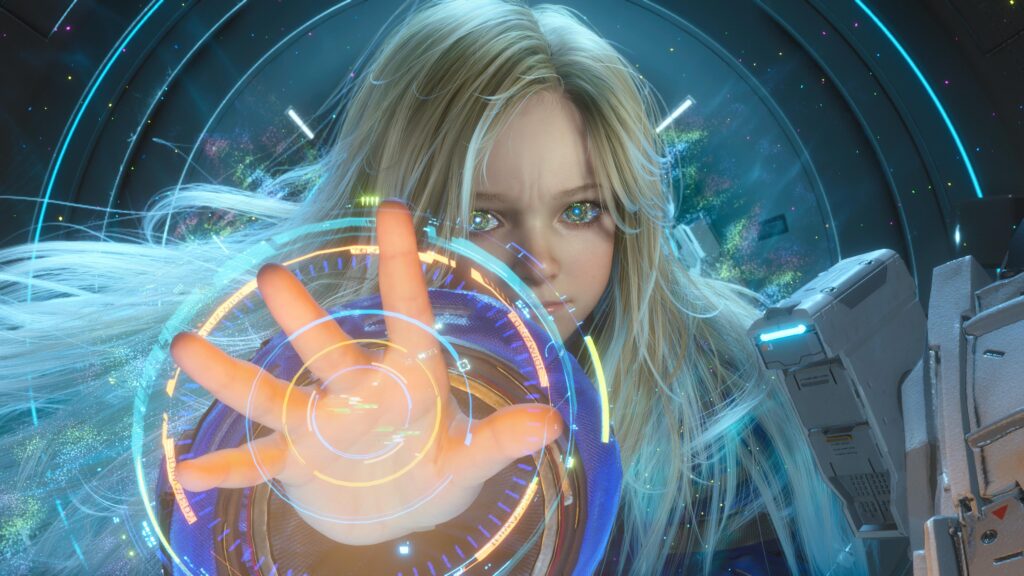
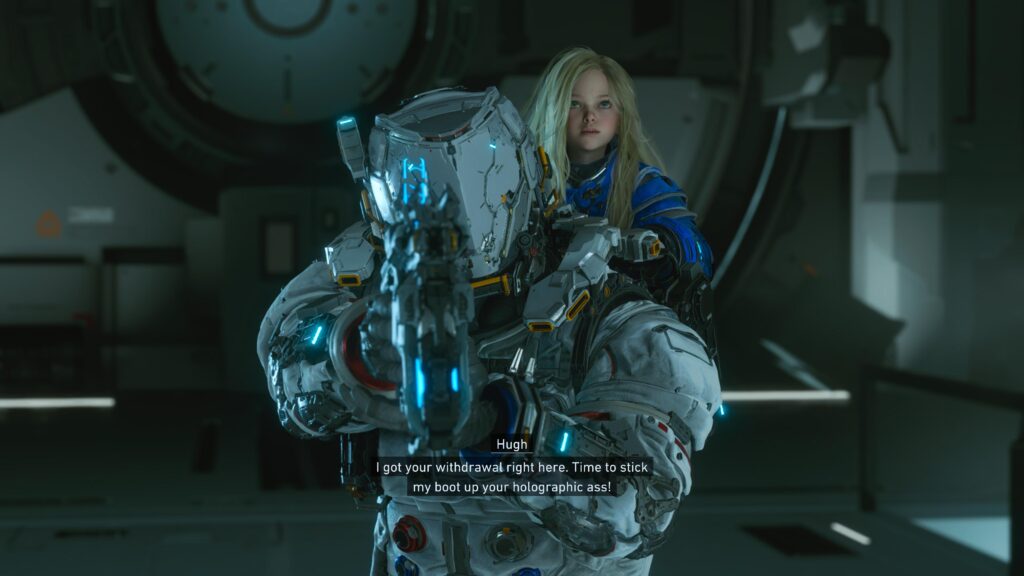
From the moment you encounter the first main event in the story, Pragmata instantly wins you over with its core duo. Hugh and Diana are incredibly charming and thoughtfully written. While the “gruff protector and a robot child” premise sounds familiar and we have seen it before, their surrogate father-daughter dynamic feels remarkably fresh. Unlike The Last of Us, where the child companion is often relegated to the background during gameplay, Diana is absolutely essential to it. Hugh literally cannot survive the game’s monstrous encounters without her real-time assistance.
And this reliance is perfectly contextualized by the world itself. The overarching narrative dives deep into the consequences of unchecked AI and a bizarre, programmable material called Lunafilament that can replicate practically anythingm it is a creative idea, I have to say and it creates a fascinating sci-fi backdrop where the environment itself acts as a shifting, hostile puzzle that Hugh and Diana must overcome together and breath fresh air for new idea of game play like ruplicating weapons and resources.
Unfortunately, the narrative strengths largely stop there. The supporting cast—and the main villain in particular—fall flat, failing to offer any real depth. The grand theme essentially boils down to a generic “evil corporation” trope, missing the profound revelation it attempts to set up. Despite having a phenomenal concept, the plot struggles to deliver the emotional impact and humanity it aims for. The climax completely missed the mark for me, saved only by a surprisingly well-executed ending.
However, that ending highlights the game’s true saving grace: the lunar setting. Trapped on the Moon, Diana’s entire perspective is defined by her absence from Earth. She has never seen our planet, and her innocent, oblivious excitement about everyday terrestrial things provides the game’s most heartwarming moments. In the end, the emotional drive to simply get Diana to Earth completely overshadows the overarching mystery of what happened in this facility.
Hacking, and Hacking More:
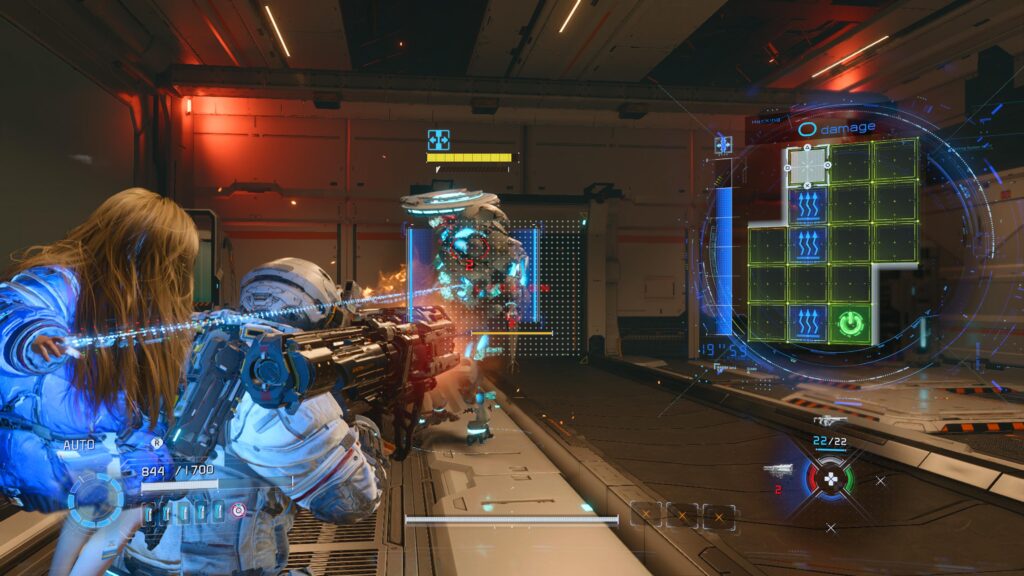
Where Pragmata truly shines is in its core gameplay loop, translating its sci-fi themes into a compelling third-person shooter with a brilliant twist. It seamlessly borrows classic RPG elements—like numbered damage outputs—and injects them into a high-octane action gameplay. Standard attacks do minimal damage against monsters in their default state, forcing you to rely on Diana’s hacking abilities to break into their defenses.
Hacking isn’t a passive skill or a simple quick-time event here. It is an active, directional puzzle where you must trace a path from a starting node to a specific endpoint to expose the enemy’s weak points. It is a highly creative system, but it drastically ramps up the tension. Managing this puzzle while fending off incoming attacks makes maneuvering a bit difficult. You aren’t completely locked into an animation mind you, but your movement is significantly slowed. Forcing yourself to dodge an incoming strike breaks your focus on the puzzle, which can make larger encounters feel incredibly chaotic. Despite the occasional frustration, it is a wildly inventive mechanic that keeps combat feeling fresh.
Outside of combat, the gameplay settles into a satisfying rhythm of exploring beautifully structured lunar facilities. The level design is simple but fun, packed with clever environmental puzzles and hidden treasures. The absolute highlight of exploration, however, is hunting down ERMs (Earth Memories).
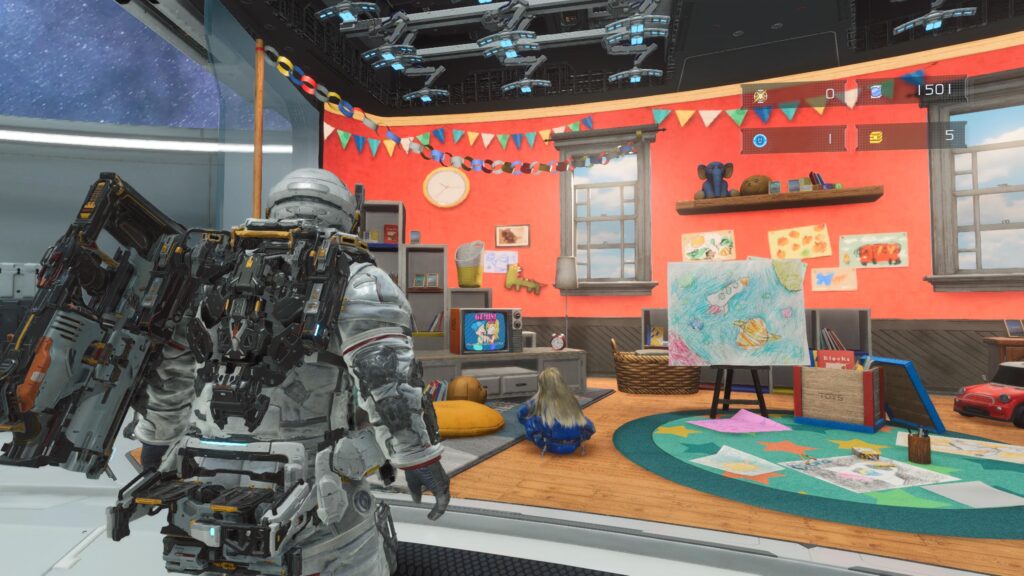
By using the creative idea of Lunafilament (the material who can replicate anything), you can physically replicate these memory caches into real-world Earth objects to decorate your base. Whether it’s a functioning TV or a cozy campsite, watching Diana interact with these items to get her first real taste of Earth is a fantastic touch that perfectly bridges the game’s mechanics with its emotional core story.
Maybe Too Customizable?
With such a creative core gameplay loop comes an equally creative arsenal. Pragmata boasts some of the most inventive weaponry and equipment design I’ve seen recently. The loadout options are huge: you have your traditional firearms like shotguns and handguns, but things get wild when you introduce deployable shock traps and automated AI flying drones to cover your flanks.
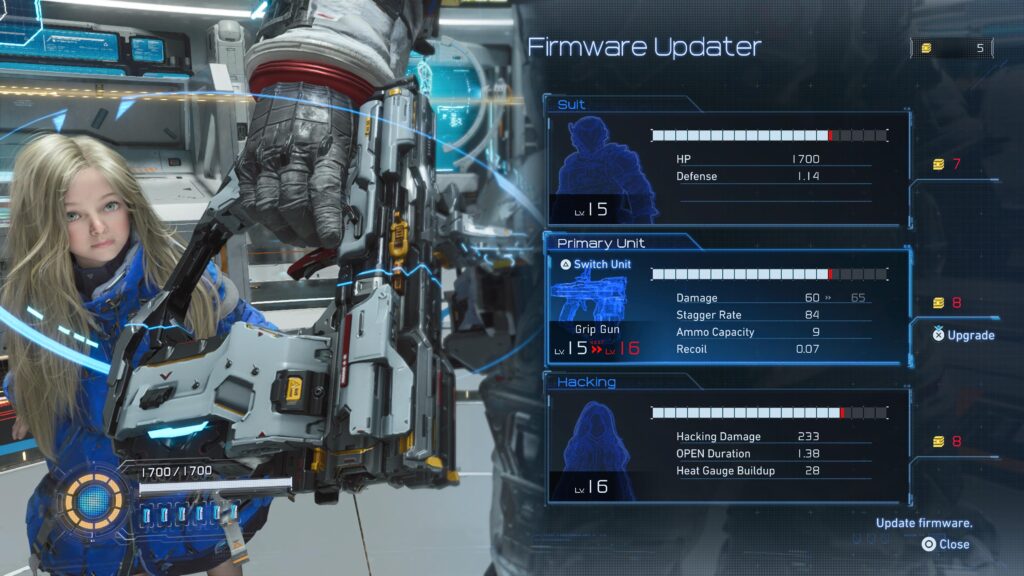
The customization extends directly to Diana as well. You can equip her with specific “inserts” that apply secondary effects during the hacking mini-game. You can reprogram enemies to fight as temporary allies, siphon their health, or paralyze them entirely to set up brutal finisher animations. And if things get too overwhelming, there’s an ultimate gauge that, once filled, lets Hugh and Diana unleash a screen-clearing attack that obliterates everything in sight.
However, this depth can sometimes feel a bit bloated. Honestly, I found several of the hacking add-ons confusing, struggling to figure out their optimal use cases. For example, the Chain Hacking ability—which is supposed to link the hacking matrix across multiple enemies—never quite clicked for me in practice.
Ultimately, I fell into the habit of ignoring the more complex modifiers. Instead, I just stuck to the attachments and mods that provided a straightforward advantage. Rather than experimenting with chain matrices, I leaned heavily on simple, effective upgrades—like extending the vulnerability window after a successful hack so I could safely deal maximum damage.
The More You Do:
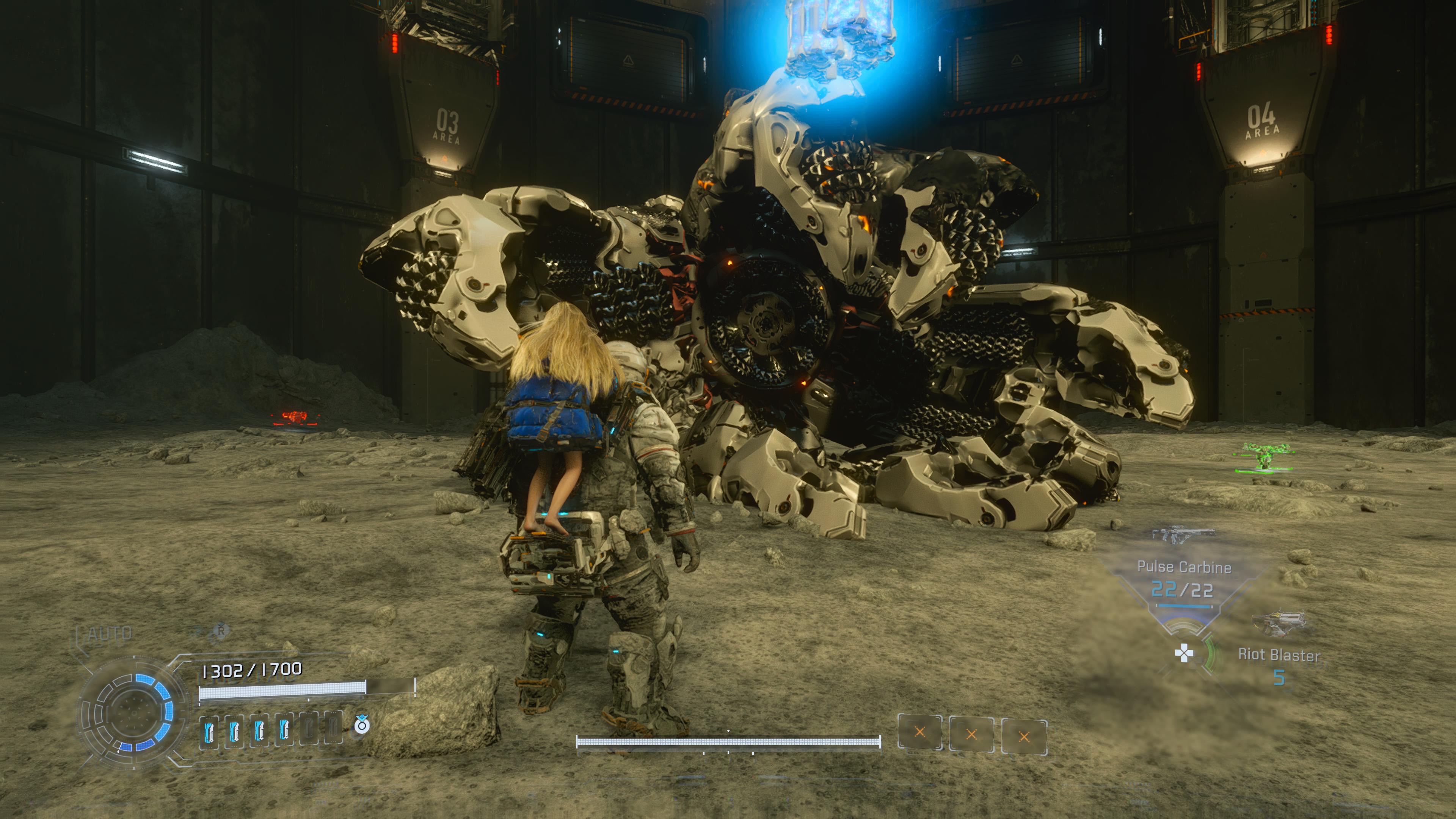
When Pragmata throws a boss at you, the sheer scale of the encounter is undeniably grand. The visual spectacle of these massive, screen-filling enemies is impressive, but this is also where the game’s unique combat mechanics start to show their cracks.
While the real-time hacking puzzles are manageable during standard mob fights, they become incredibly frustrating during boss battles. Trying to solve a delicate directional puzzle while simultaneously dodging massive, sweeping area-of-effect attacks completely disrupts the pacing. You are often forced to break your hack just to survive, turning what should be a thrilling showdown into a tedious start-and-stop affair. Because of this friction, the boss fights ultimately feel very hit-or-miss. This inconsistency extends all the way to the end of the game; despite the massive build-up, the final boss felt remarkably surface-level, lacking the mechanical depth or narrative payoff you would expect from the climax.
You’ll feel similar mechanical growing pains when tackling the game’s combat simulator. These VR-style side missions challenge you with a three-tiered checklist of objectives to complete in a single run. When the screen gets chaotic, trying to perfectly execute all three goals at once is an exercise in frustration. However, the game deserves credit for respecting your time here. It doesn’t force you into endless trial-and-error; you only need to complete the primary, mandatory goal to successfully clear the simulator mission and grab your rewards, letting you completely ignore the more frustrating optional tiers if you choose to.
The Power of the RE Engine, Again:
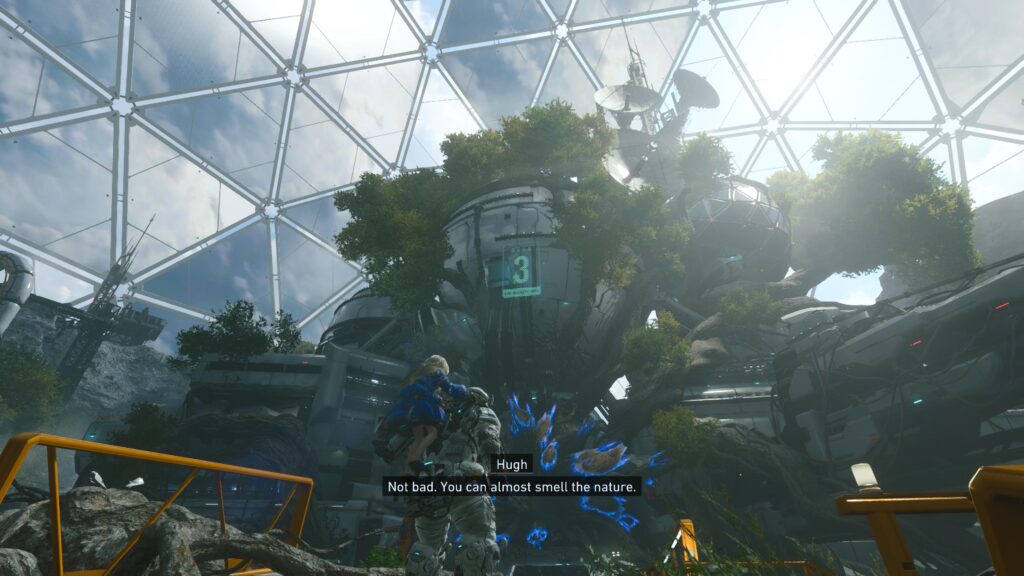
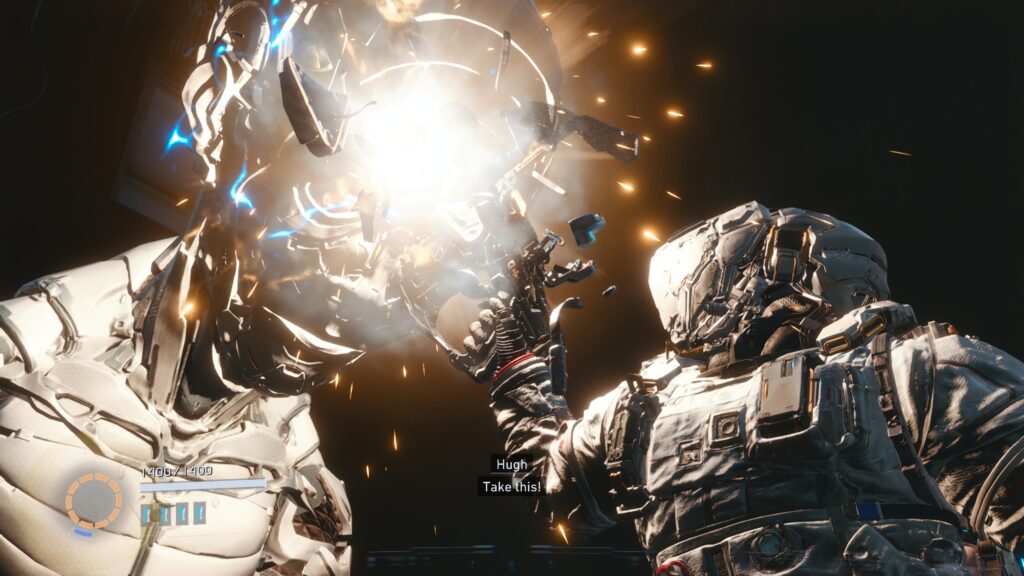
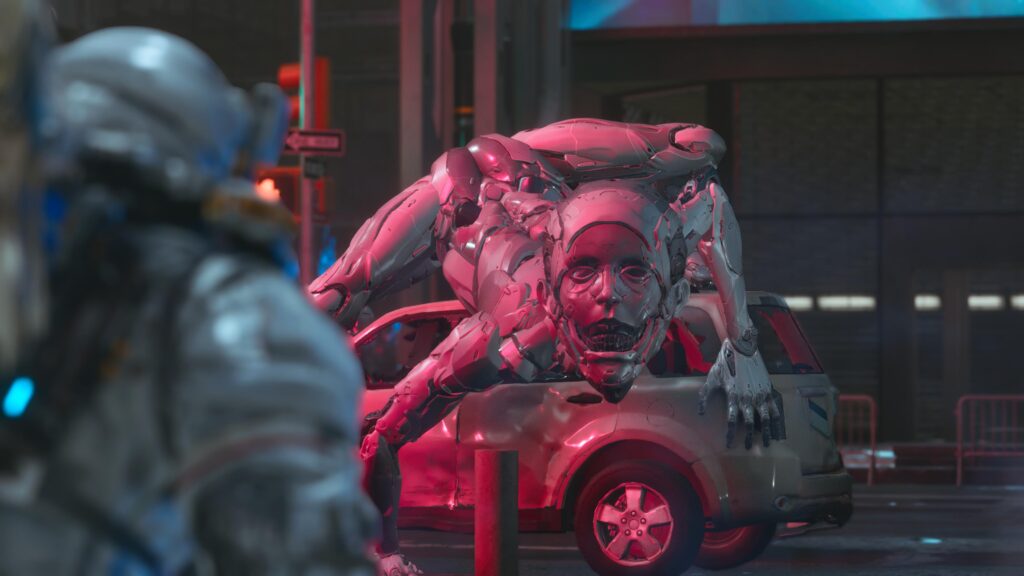
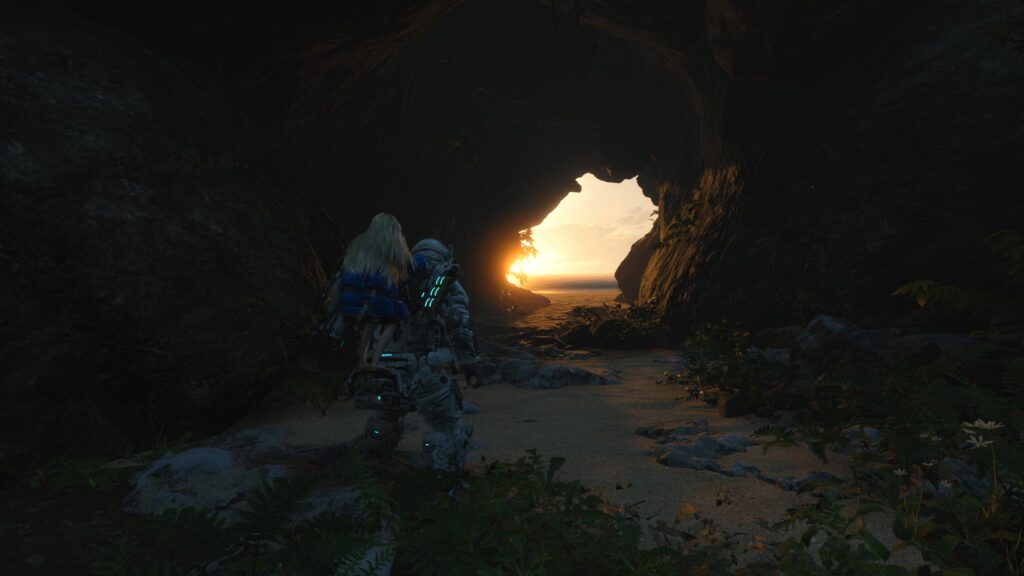
If there is one area where Pragmata is an absolute triumph, it is the graphics. The game is a stunning visual showcase. Running on Capcom’s proprietary RE Engine, the visual fidelity is off the charts. If you are used to seeing this engine render the dark, gritty details of survival horror, you will be blown away by how effortlessly it pivots to crisp, high-octane sci-fi. The animations are buttery smooth, and the particle effects during chaotic combat sequences make every encounter feel incredibly fluid and dynamic.
Unfortunately, the audio design doesn’t quite reach those same heights. The sound effects pack a decent punch, but the original soundtrack is largely forgettable. The music is just “doing its job”—it swells when it needs to and fades into the background during exploration, but there isn’t a single memorable track or motif that stays with you after you put the controller down. It serves its purpose, but it fails to elevate the emotional weight of Hugh and Diana’s journey.
So, did Pragmata justify the years of waiting and multiple delays? Ultimately, yes, but it comes with a few caveats.
The game is a stunning visual showcase for the RE Engine, effortlessly transitioning from gritty action to pristine sci-fi landscapes. At its core, the beating heart of Pragmata is Hugh and Diana. Their reliance on each other—both narratively and mechanically—elevates the experience. Gathering Earth Memories to show Diana a glimpse of our world provides a genuinely heartwarming motivation that overshadows the game’s weaker corporate conspiracy plot and forgettable villains.
Mechanically, the game swings for the fences. The real-time hacking puzzle is a brilliant twist on the third-person shooter formula, making you earn your high damage numbers. However, that ambition occasionally trips over itself. Managing these puzzles during chaotic boss fights or within the multi-tiered combat simulator can lead to frustrating, start-and-stop pacing. Furthermore, the bloated upgrade system often leaves you ignoring complex mechanics in favor of simple stat buffs.
Despite its mechanical friction and a soundtrack that fails to leave a lasting impression, Pragmata is a bold, creative new IP. It is an experience defined by its charm, its visual spectacle, and a central relationship that genuinely makes you care. It may not be flawless, but it is undoubtedly a journey worth taking.
- An RE Engine showcase, again, delivering buttery smooth animations to breathtaking lunar environments.
- A genuinely heartwarming father-daughter dynamic where it is essential to your survival, beautifully elevated by the emotional depth of the journey's end goal.
- A highly inventive combat loop that seamlessly blends third-person shooting with a unique, real-time hacking puzzle system.
- A massive, creative arsenal of weaponry and equipment that gives you explosive tactical options.
- Start-and-stop pacing where delicate hacking puzzles clash aggressively with dodging chaotic enemy attacks.
- A lackluster overarching narrative built on generic tropes, featuring unconvincing villain and a surprisingly surface-level climax.
- A bloated upgrade system with convoluted add-ons that ultimately pushes you to just rely on simple, basic stat buffs instead.